Do you actually need a website to run a successful business?
READ THIS Before You Decide whether you Need a Website
Common client question - "Everyone says I need a website. But do I?”
A website can feel like one of those things a “proper” business is simply supposed to have. So it’s easy to spend money building one before you’ve worked out what job you actually need it to do. We’ve met business owners with expensive websites generating almoxst nothing and others creating plenty of business without relying heavily on one at all.
Before you buy, build or rebuild, start with the human-first question: What problem are you expecting the website to solve?
A website can be an incredibly valuable business asset. It can also be an expensive way of avoiding a more important question. Before you choose a platform, brief a developer or start comparing designs, there are a few things worth understanding about the business the website is supposed to support.
Before you build your website, build your business.
A website won’t create demand for a business that doesn’t yet understand its customers. Marketing won’t fix a proposition that isn’t clear. AI won’t solve problems you haven’t yet defined.
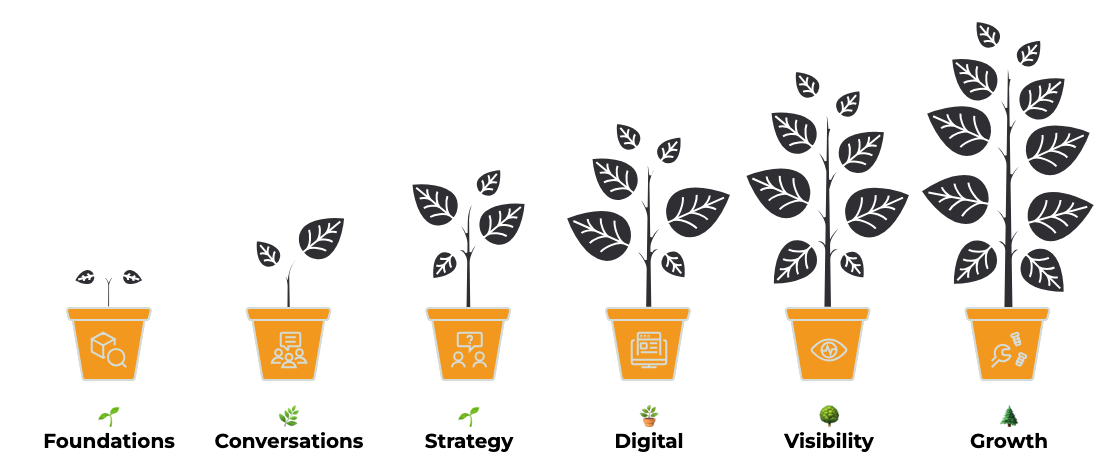
You need enough website for the stage your business is currently in. That may not mean a large custom-built site just just, the aim is to build online traction and use your successes to help you build systems to support the work you and your team are already doing.
Let’s get started!
Start by asking yourself and your team:
What job does the website need to do?
Who needs to find it?
What will they be looking for?
What happens after they arrive?
What evidence do you already have that people want the offer?
How will traffic reach it?
Who will own and maintain it?
What would success look like?
For a new service business, the minimum useful version might include:
A clear homepage
A short explanation of what you offer
Information about who it is for
A way to establish credibility
Contact details
One clear next step
You may also need essential legal and privacy information, depending on what data you collect and how the site operates.
That can be enough to begin, as you learn more, the website can grow around real customer questions and proven demand.
You might later add:
Individual service pages
Case studies
Testimonials
FAQs
Articles
Guides
Event pages
Booking systems
Email sign-up forms
Ecommerce
Membership areas
More advanced integrations
The important principle is to start with the smallest website that performs a useful job.
CREATE the website equivalent of a Minimum Viable Product
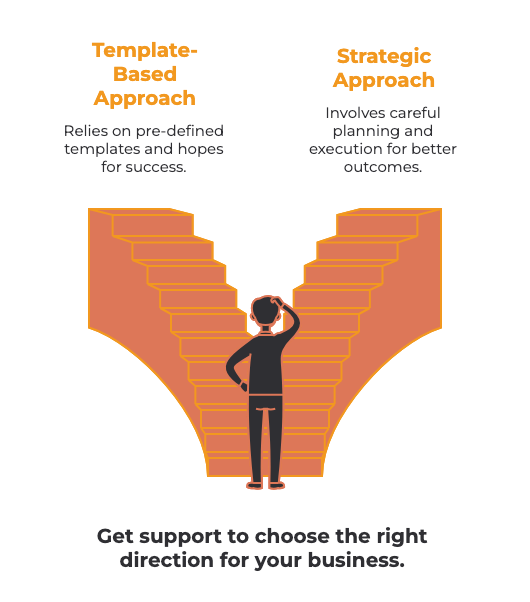
A Minimum Viable Website is not a bad or unfinished website. It is the simplest version that allows you to test your assumptions, serve customers and learn what needs to happen next.
Your website should develop in response to evidence.
The pages people visit, the questions customers ask, the searches that lead to you and the points at which visitors leave can all help you understand what needs improving.
The website becomes more valuable over time because it accumulates:
Useful content
Search authority
Customer insight
Testimonials
Case studies
Links
Audience understanding
Clearer language
That is why the decision should not simply be whether to have a website, it should be how to build a website that becomes a genuine business asset rather than an expensive online leaflet.
When You Probably Do Need a Website
A website is likely to be important if:
Customers routinely search for services like yours
People need to compare you with competitors
You need to demonstrate expertise or credibility
You want to generate enquiries outside your existing network
Your services require explanation
Customers need to book, apply, buy or register
You want to publish useful resources
You rely on local search
Referrals need somewhere to verify your business
You are investing in SEO, advertising or content
You want to build an email list
You need a stable digital home that you control
The website becomes especially important when the customer’s decision involves trust, risk, complexity or significant spending, the more somebody needs to understand before buying, the more useful a well-structured website becomes.
When You May Not Need a Full Website Yet
You may not need a large website immediately if:
You are still testing the idea
You do not yet know which offer people want
Most early work is likely to come through direct relationships
You are operating temporarily through a marketplace
You need to validate demand before investing
The business model is likely to change quickly
In those circumstances, a simple landing page or credible profile may be enough. The goal is not to avoid building a website forever. It is to avoid building more than you currently understand. You should still consider where people will go when they search your name or business.
Even a basic page can explain:
Who you are
What you are testing;
Who you help
How to contact you
Where to follow your work
Go and Try This
Write down the three most important jobs your website needs to perform.
Do not begin with pages or design.
Begin with outcomes.
For example:
Help referred customers understand what I offer
Generate enquiries from local search
Give potential clients enough confidence to book a conversation
Then ask:
Does my current website perform these jobs?
Could a simpler website perform them?
What information would a customer need?
What action should the customer take?
How would I know whether the website was working?
If you do not yet have a website
Use those answers to define the minimum useful version.
If you already have a website
Use them to decide what should be changed, removed or added.
A quick reality check
It’s remarkably easy to spend money solving the wrong problem. Over the years I’ve met businesses convinced they needed a new website, better SEO or a complete rebrand, when the real issue was something much simpler: unclear messaging, a weak customer journey, poor ownership, or a lack of measurement.
This Business Clarity Check is designed to slow the decision down just enough to help you understand where you are today. It isn’t about catching you out or giving you a score. It’s about helping you identify the areas worth exploring before deciding what to do next.
Because the best business decisions rarely start with buying something.
They start with understanding the problem you’re trying to solve.
Sometimes you don’t need someone to do the work you just need someone to help you think it through. If you’d like an independent perspective, I’ll review your answers with you, challenge your assumptions and help you decide on the next best step.